I am half Irish and half German.
I thought I'd start by telling you this genealogical fact about myself because it may help to convey how difficult the 8-week experiment I am about to begin is truly going to be for me.
8 weeks without beer. Without potatoes. Without Black Forest cake.
Didn't a million of my people die because they couldn't get their hands on a tasty spud? My Guinness-and-German-potato-salad-loving ancestors are surely rolling in their graves. My only saving grace is that St. Patrick's Day falls the week after the full-blown challenge ends. Otherwise, I would most certainly be posthumously disowned.
I'm going to save for a future posting the genesis of my new obsession with CrossFit, but suffice it to say I joined the amazing CrossFit South Arlington a few months ago, and it has since become my home away from home, especially since The Man started a new job that has him out of town Monday through Thursday every week. I've officially "drunk the CrossFit Kool-aid," as CrossFitters like to say. And beginning next Monday, I'll be drinking the CrossFit dairy-free green smoothie, too.
As a nutritionist, one of the things I like about CrossFit is that there is not only an emphasis on exercise, but there is also an emphasis on nutrition. CrossFit boxes (the term "box" is CrossFit-ese for "gym") frequently hold Whole 30 challenges, in which members voluntarily agree to give up eating all things that are right and good in this world for a period of 30 days.
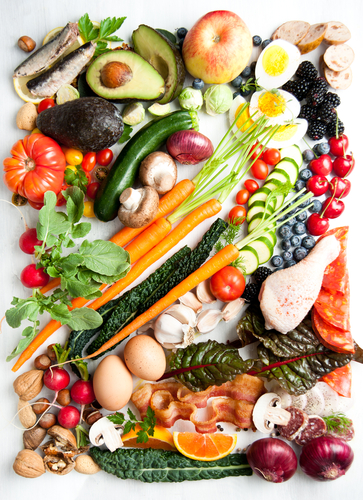
The program is based on the New York Times bestselling book It Starts With Food by Dallas and Melissa Hartwig. Without getting into too many details, the Whole 30 is a Paleo-based program that focuses on eating whole foods like fruits, vegetables, nuts, seeds and lean animal protein, and eliminating processed foods, grains, legumes, alcohol, sugar, dairy and certain processed oils. The theory is that our genetically determined physiologies have not evolved since the Paleolithic period, and since the advent of agriculture and animal husbandry some 10,000 years ago, we are eating in a way that is inconsistent with our genetic makeup, resulting in the proliferation of so-called "man-made" diseases like diabetes, heart disease and cancer.
Personally, I don't know anything about the health and longevity of cavemen (I imagine dinosaurs and other wild things played a role in truncating their lifespans), and the basis and benefits of the Paleo diet are not without significant scientific controversy. There is an interesting article on the Precision Nutrition website that challenges some of the foundational principles of Paleo, including evidence (think preserved stool samples and grain grinding tools) that suggests our cave-dwelling ancestors ate both grains and legumes.

As a nutritionist and plant-based eater (after all, cavewomen were gathers), I am also well versed in the research that links the consumption of animal protein to numerous diseases of modern society, as well as studies of the habits of some of the longest and healthiest living populations in the world, whose diets tend to focus on eating fresh fruits, vegetables, legumes, grains and very limited animal protein. Oh, and wine. A primarily plant-based diet and daily wine/saki consumed in moderation seem to be keys to keeping folks in places like Sardinia (Italy), Okinawa (Japan) and Icaria (Greece) alive and kicking well into their hundreds. For more information on the 9 common characteristics of the lifestyles of the healthiest and longest living populations in the world, I highly recommend checking out the New York Times bestseller The Blue Zones by Dan Buettner, who was sent by National Geographic to study these communities.
I absolutely believe, however, that our society has created many of our own health problems by eating too many processed foods. Too much sugar. Too many refined grains. And yes, even too much wine and beer. And yet, despite the fact I have spent more than 20 years experimenting with various nutritional and fitness programs, there is basically no way I could give up all of these foods at the same time without the help of a supportive community. Misery loves company.
Enter CrossFit South Arlington's Back to Basics Program. This is a 12-week program that focuses on improving your nutrition and your strength, with an 8-week concentration in strictly eating like a cave person (the last 4 weeks of the 12 are dedicated to finding your new nutritional norm) by following a program similar to the Whole 30. The biggest difference is that the CFSA program lasts a total of 8 weeks - not 30 days - and if you cheat, you owe Megan, our fearless leader in this adventure, cold hard cash. This is definitely the stick rather than the carrot approach to motivation.
Or should I say the bone rather than the meat approach?I am thankful to Megan for allowing me to join the challenge in the first place, since she was very hesitant having no experience with a Paleofied plant-based diet. Ultimately, she is trusting my nutritional knowledge and education, and we both agreed it would be an interesting experiment. It is clear that there are still a lot of misconceptions about the ability of vegetarians and vegans to perform optimally as athletes without eating meat, and one of the other coaches at CFSA even asked me how many vegans I knew who could do a pull-up when I indicated one of my goals for the program was to complete 3 pull-ups in a row. The question was asked in a way that suggested he would be shocked if someone who ate only "nuts and twigs" would ever be able to exhibit this sort of strength. I'm wondering if he ever noticed how swiftly and powerfully our plant-based monkey brethren pull themselves up over tree branches, or the powerful muscles of race horses, whose natural diet consists of just grass.
I'm just sayin'.
Searching online it is clear that there are other veggies who have tried similar programs, but the information is not extensive, so I will document my experience to help others who might choose to give this a try. I'm calling it the Paleotarian Experiment, which I guess makes me the Paleotarian Experimentarian. The only exception I'm going to make to the official protocol, as agreed to by Megan, is to include some legumes into the diet to serve as a protein source in place of meat and fish. When I cook at home, which will clearly have to be most of the time, I will choose dried beans that I soak, as soaking beans overnight makes them more easily digestible, and although I've never had an issue, digestibility is apparently one of the concerns of the Paleo folks when it comes to "the musical fruit."

I look forward to seeing how this eating plan impacts my energy, my sometimes sensitive stomach, and my overall wellness. The program officially begins on Monday, so this weekend I plan on going on a beer and potato binge, just to make my forefathers proud. I look forward to keeping you updated as the days and weeks progress. Wish me luck, and please understand if I ask for a rain check the next time you ask me out for margaritas and Mexican.
Until next time,
Kathleen
No comments:
Post a Comment